
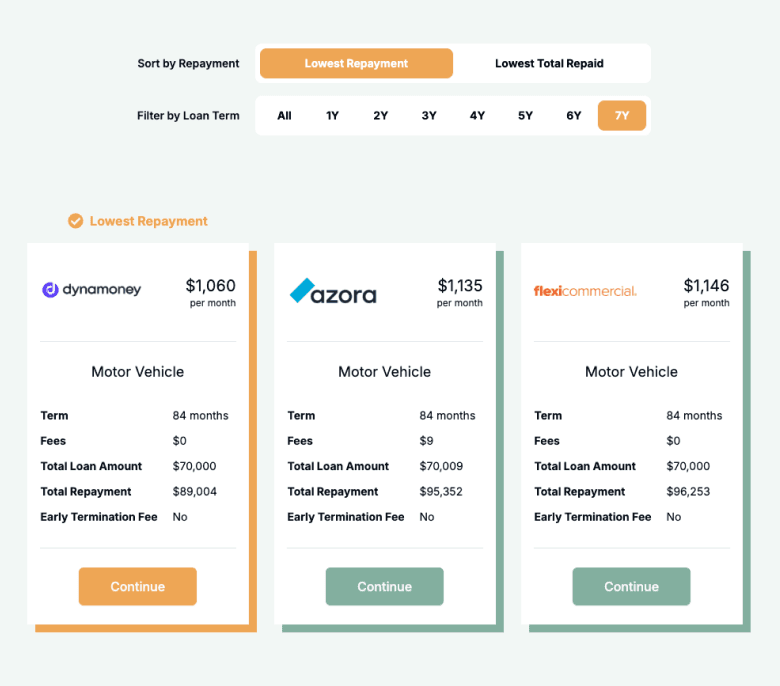
















































An ABN loan can solve short-term working capital gaps, fund equipment or bridge seasonality for sole traders, contractors and very small businesses operating under an ABN. This guide answers: what an ABN loan (business loan for ABN holders) is, who should consider one, how different ABN-focused products compare, what lenders look for, typical costs and risks (including "no credit check" claims), and the exact steps you should follow to apply. Read on for comparison tables, a worked repayment example and practical checklists so you can assess whether an ABN loan fits your needs.
An ABN loan is any business finance product made available to an entity that holds an Australian Business Number (ABN) — this includes sole traders, companies, trusts and partnerships. Unlike a personal loan under your individual name, an ABN loan is under the business identity (though many lenders assess personal credit histories for sole traders and directors). ABN loans cover a range of products: short-term unsecured loans, secured business loans, equipment finance, invoice finance and merchant cash advances.
Key distinctions:
See related topics like Invoice Discounting and Equipment Finance for deeper reads.
Typical users include:
If you invoice customers, manage seasonal demand, or need a specific asset, an ABN loan (or ABN business loan) is often a practical option compared with purely personal credit.
Below is a concise comparison of common ABN loan product types to help you match purpose to product.
| Product | Typical amount | Term | Security | Typical cost / interest | Best for |
|---|---|---|---|---|---|
| Secured business loan | $10k–$1M+ | 1–10 yrs | Property or business assets | 6%–14% p.a. typical* | Larger growth capex, long-term finance |
| Unsecured short-term loan | $2k–$150k | 1–36 months | None | 10%–40% p.a. (higher) | Quick cashflow, small amounts |
| Merchant cash advance | $5k–$500k | Repayment via % of card takings | No traditional security (recovery clause) | Factor fees 1.1–1.5x advance | Seasonal sales, card-heavy businesses |
| Invoice finance / factoring | $10k–$2M | Ongoing | Invoices assignment | 2%–5% per month equivalent | Businesses with unpaid invoices |
| Equipment finance / hire purchase | $5k–$500k+ | 1–7 yrs | Equipment | 5%–16% p.a. | Buying machinery, vehicles |
| Business credit card / overdraft | $1k–$200k | Revolving | Often unsecured | Cash rate + fees; variable | Ongoing working capital, short term |
*Indicative ranges only; get personalised quotes. For equipment finance details see Equipment Finance. For short working capital alternatives compare Overdraft.
Lenders assess both the business and the principal(s). Common criteria:
Sole traders often face more reliance on personal credit, while established companies can access larger secured loans with corporate financials.
Understanding the all-in cost matters more than headline rates. Key cost components:
Compare APRs (all-in rate including fees) rather than nominal rates. Ask for a written schedule showing interest, establishment and any early repayment penalties.
To compare lender options look at a general business product overview like Business Loans and estimate repayments via a Business Loan Calculator.
Worked example (indicative): you borrow $10,000 to be repaid over 24 months at 12% p.a., with a $100 establishment fee and $10 monthly admin.
How the numbers break down:
This is an indicative calculation—use an online tool for precise results: loan repayment calculator or Business Loan Calculator.
Pros:
Cons:
Consider these alternatives depending on need:
Choose an alternative based on cost, security and repayment flexibility.
Know the regulatory framework:
"No credit check" offers are a red flag: they exist, but typically come with higher costs or require other forms of security (e.g., PPSR-listed assets or rollback costs). Red flags to watch for:
Always request written terms, compare the all-in APR and verify the lender via ASIC and business registries.
Possibly — specialist lenders may accept lower credit scores but expect higher rates, stricter security or personal guarantees.
Varies: non-bank lenders 24–72 hours for small loans; banks 1–3 weeks depending on complexity.
If you provide a personal guarantee or the lender checks director credit, yes. Sole traders are often assessed on personal credit as well.
Some are legitimate but usually more expensive. Check licensing, request written terms and avoid upfront fees.
Depends on product and amount. Equipment finance is secured by the asset; secured business loans typically use property or business assets. Unsecured loans avoid collateral but cost more.
Use ASIC registers and search for company/credit licence details at https://asic.gov.au.
Gather your ABN, recent BAS, 3–6 months of business bank statements, ID and management accounts. Compare product types against your purpose (equipment, invoicing or short-term working capital), request written quotes that show all fees and APR, and verify lender licensing. Use a repayment calculator to model scenarios.
ABN loans offer flexible finance for sole traders, contractors and small businesses, with products ranging from unsecured short-term loans to secured equipment finance. Choose the product type that matches your need (working capital, assets or invoices), understand the all-in cost including fees and interest, verify lender licensing through ASIC, and compare written quotes before committing. Always request a clear repayment schedule and be wary of "no credit check" offers that lack transparent terms.
This article is general information only and is not legal, tax or financial advice.