Debt Consolidation Loans: Compare 50+ Australian Lenders

Roll credit cards, personal loans and other balances into one fixed repayment. Compare matched offers with direct creditor payouts so old accounts close and interest stops accruing.

Emu Money 5 star verified Google Reviews

5.0 rating

Debt Consolidation Loan Australia
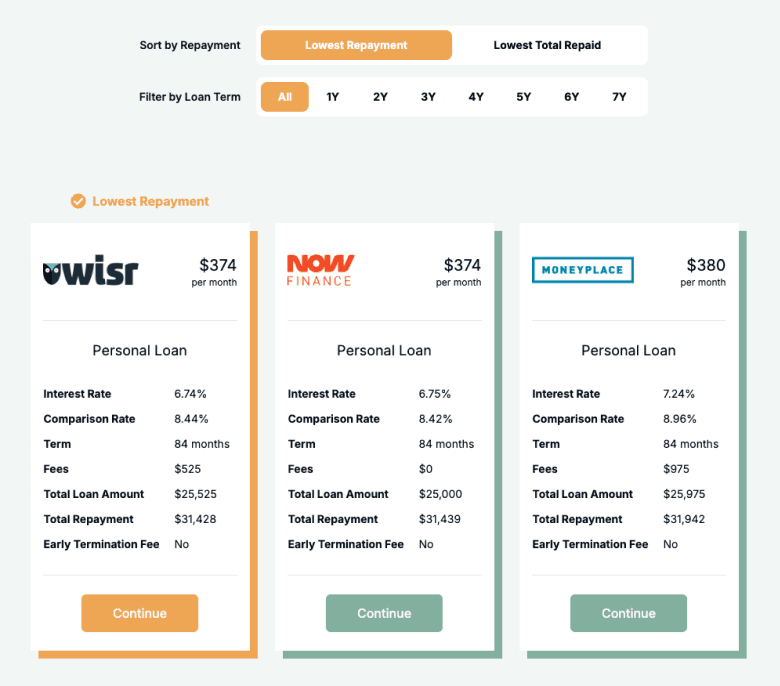
Emu Money Debt Consolidation Loan Comparison

A debt consolidation loan replaces multiple debts, such as credit cards, personal loans and buy now pay later balances, with a single fixed loan of $2,000 to $100,000+ over 1 to 7 years. Australians currently owe roughly $21.6 billion in credit card debt accruing interest at an average rate of around 20.99%, so moving that balance into a lower, fixed-rate personal loan can cut both the interest cost and the number of repayments to track. Emu Money compares offers from 50+ lenders in one application, with some lenders paying old creditors directly at settlement.

Last updated August 2026

Simplify multiple debts into one repayment

One application compares debt consolidation loan offers across 50+ lenders. See your options before deciding how to deal with high-interest cards, loans and overdue accounts.

Borrow $2,000 to $100,000+

From clearing a couple of credit cards to consolidating a large mix of debts. Choose the amount that covers what you currently owe.

Terms of 1 to 7 years

Fixed monthly repayments for the life of the loan. Shorter terms cost less interest overall; longer terms lower the monthly repayment.

Same-day decisions possible

Complete applications can receive a same-day decision, with funds available within 24 to 48 hours for eligible profiles.

Secured or unsecured

Secured loans can unlock larger amounts and lower rates using an asset like a car. Unsecured loans are faster and need no collateral.

Direct creditor payouts

Many lenders on our panel pay your existing creditors directly at settlement, so old accounts close and interest stops accruing immediately.

One clear end date

A fixed term means a defined date you'll be debt-free, instead of revolving credit that can carry on indefinitely.

How to get a debt consolidation loan

Four steps from application to settlement. List out what you owe first so we can match you to lenders who can pay those accounts out directly.

1.

List your existing debts

Gather balances, interest rates and minimum repayments for every credit card, personal loan or other debt you want to consolidate.

2.

Compare matched offers from 50+ lenders

Enter your total debt and we match you against our lender panel. Compare rates, terms and repayments side by side with no impact on your credit score.

3.

Upload documents and get assessed

Provide ID, income proof and liability statements for your existing debts. Same-day decisions are available for complete applications.

4.

Settle and simplify

Where offered, your old accounts are paid out directly by the new lender. You're left with one fixed monthly repayment and a clear end date.

How Debt Consolidation Works

Backed by over 50+ lenders

Giving you the best chance of being approved.

Affordable Car Loans
Alex Bank
Angle Finance
ANZ
Australian Motorcycle & Marine Finance
Australian Premier Finance
Automotive Financial Services
Azora
Bank of Melbourne
Bizcap
BOQ
Branded Financial Services
Capify
Capital Finance
CarStart Finance
CFI
Dynamoney
EarlyPay
Equity Tap
Finance One
Finstro
Firstmac
Flexi Commercial
Green Light Auto
Grenke
Latitude
Liberty
Lumi
Metro
Money3
MoneyMe
MoneyPlace
Morris Finance
Moula
Multipli
Now Finance
Pepper Money
Plenti
Prospa
Resimac
ScotPac
Selfco
Shift
SocietyOne
UME Loans
Vestone
Westpac
Wisr
Yellow Gate

Compare debt consolidation loans from 50+ lenders

One application. Multiple matched offers. See your personalised rate before you commit to a single lender's terms.

How debt consolidation loans work in Australia

A debt consolidation loan is a personal loan used to pay off multiple existing debts, leaving you with one new loan and one fixed monthly repayment. The new lender either transfers funds to your bank account so you pay off each creditor yourself, or, with many lenders on our panel, pays your creditors directly at settlement.

Direct creditor payouts matter because interest keeps accruing on old accounts until they're actually closed. If the funds sit in your account for even a few days before you pay off each card, you're paying interest twice. A lender that settles directly with your card issuers and other lenders removes that gap.

For a step-by-step walkthrough with a worked before-and-after example, see how debt consolidation actually works. It sets out what changes (repayment count, interest rate, term) and what doesn't (the total amount you legally owe isn't reduced, only refinanced).

What debts you can consolidate

Most consolidation loans can combine any mix of consumer debt into one facility. Credit card balances are the single most common inclusion, since Australians are currently carrying around $21.6 billion in credit card debt accruing interest, much of it at rates above 20%.

Beyond credit cards, lenders on our panel will typically consolidate personal loans, buy now pay later balances (including overdue accounts with late fees stacking up), medical bills, car or consumer finance, and overdue utility bills before they escalate to disconnection or debt collection.

What generally can't be rolled into a personal debt consolidation loan: a home loan itself (that requires refinancing or a mortgage top-up), business debts, and debts already in a formal insolvency arrangement such as a Part 9 debt agreement.

Debts commonly consolidated

  • Credit card balances (often the largest single inclusion)
  • Other personal loans
  • Buy now pay later accounts, including overdue balances
  • Medical bills and payment plans
  • Car or other consumer/asset finance
  • Overdue utility bills and telco defaults

The real cost: when consolidation saves money

Consolidation saves money when the new loan's interest rate is meaningfully lower than the blended rate on what you currently owe, and you stop adding new balances to the accounts you've paid off. It doesn't save money by itself; it just changes the structure of the debt.

Credit cards typically charge revolving interest and require only a small minimum repayment (commonly 2% of the balance or $25, whichever is higher), which barely reduces the principal. A personal loan has a fixed term and a fixed repayment that's calculated to fully repay the balance by the end date, which is why the total interest paid is usually lower even before comparing rates.

Take $15,000 spread across two credit cards averaging 20.99%. Paying only the minimum can take years to clear and cost thousands more in interest than the original balance. Consolidated into a personal loan at a materially lower fixed rate over 3 to 4 years, the same $15,000 is repaid on a fixed schedule with a known end date and a known total interest cost. Credit card debt consolidation walks through this comparison in detail, including when a balance transfer card is the cheaper option instead.

Credit cards vs a consolidated personal loan (worked example, $15,000)

FeatureTwo credit cardsConsolidated personal loan
Balance$15,000$15,000
Typical rate~20.99% (avg.)Set by your credit profile (compare via Emu Money)
Repayment structureRevolving, no fixed termFixed monthly instalment
Minimum repayment2% of balance or $25, whichever is higherFull amortising repayment
Time to clear on minimumsYears, if only minimums are paidFixed term, e.g. 3-4 years
End dateNone while balance remainsKnown date, loan fully repaid

Secured vs unsecured consolidation

An unsecured consolidation loan needs no collateral. It's assessed on your income, credit history and existing commitments, and can usually settle faster than a secured loan. Unsecured loans suit borrowers consolidating smaller amounts who want to avoid putting an asset at risk.

A secured consolidation loan uses an asset, most commonly a car, as collateral. Securing the loan can unlock a larger borrowing limit and a lower rate than an unsecured loan for the same credit profile, but it also means the lender can repossess the asset if you default. Converting unsecured debt like credit cards into a secured loan is worth thinking through carefully: you're putting an asset at risk to pay off debt that previously carried no such risk.

For a full breakdown of both structures alongside balance transfer cards and mortgage top-ups, see the best types of loans for debt consolidation in Australia.

Secured vs unsecured consolidation loans

FeatureUnsecuredSecured
Collateral requiredNoneCar or other asset
Typical rateHigher than secured, for the same profileLower than unsecured, for the same profile
Borrowing capacityGenerally lower limitsGenerally higher limits
Approval speedFaster, fewer documentsSlower, valuation/asset checks required
Risk if you defaultCredit file impact, no asset at riskAsset can be repossessed
Best forSmaller balances, borrowers without a suitable assetLarger balances, borrowers with a car worth $10,000+

Rates, fees and repayment terms

Your rate on a debt consolidation loan depends on your credit score, income, existing commitments and whether the loan is secured. There's no single advertised rate that applies to every applicant; the rate you're offered is priced to your individual profile, which is why comparing multiple lenders in one application matters more than chasing a single advertised headline rate.

Terms typically run from 1 to 7 years. A shorter term increases the monthly repayment but reduces total interest paid. A longer term does the opposite: lower monthly repayments, more interest over the life of the loan. On a $30,000 consolidation loan, moving from a 3-year term to a 7-year term can roughly halve the monthly repayment while roughly doubling the total interest, so it's worth matching the term to what you can actually afford rather than defaulting to the longest option.

Common fees to check before choosing a loan: establishment or application fees (commonly $0 to around $1,000, sometimes charged as a flat fee and sometimes as a percentage of the loan), monthly account-keeping fees ($0 to around $15), and early repayment fees on some loans. A $15 monthly fee sounds small but adds up to $900 over a 5-year loan, so it's worth weighing against the comparison rate rather than the advertised rate alone. For a deeper breakdown of fees and how a personal loan compares to a mortgage top-up for consolidation, see personal loan for debt consolidation: how it works.

What affects your rate

  • Credit score and repayment history
  • Income and employment stability
  • Existing debts and monthly commitments
  • Whether the loan is secured or unsecured
  • Loan amount and term selected

Credit card debt consolidation

Credit cards are consistently the most expensive debt most Australians carry, with an average interest rate around 20.99% and total outstanding balances accruing interest at roughly $21.6 billion nationally. Because card interest compounds daily and minimum repayments barely touch the principal, card debt is often where consolidation delivers the clearest saving.

There are two main paths for consolidating card debt: a personal loan (fixed rate, fixed term, works for any balance) or a balance transfer card (0% introductory rate for a promotional period, typically 12 to 24 months, but the unpaid balance reverts to a high standard rate afterwards). Balance transfers suit smaller balances you're confident you can clear within the promotional window; personal loans suit larger balances or anyone who wants rate certainty for the full repayment period.

Credit card debt consolidation: your options in Australia sets out the full comparison, including what happens to your cards after you consolidate and why closing or limiting them matters.

Debt consolidation with bad credit

Having a lower credit score doesn't automatically rule out debt consolidation, but it does change the maths. Specialist lenders on our panel work with impaired credit profiles, though the rate offered will be higher than for a borrower with a clean credit file. The relevant question isn't whether you can get approved, it's whether the rate you're offered is still lower than what you're currently paying across your existing debts.

Lenders assessing a bad-credit application look beyond the credit score itself: recent defaults (paid or unpaid), how much of your available credit you're using, and whether you've applied for credit multiple times recently. Paying off a small overdue default, or reducing a card's credit limit rather than closing it, can improve how you're assessed before you apply.

Debt consolidation loans with bad credit in Australia covers realistic rate expectations, when consolidation still makes sense at a higher rate, and when it doesn't.

Alternatives to debt consolidation

A debt consolidation loan isn't the only option, and it isn't always the cheapest one. If you're struggling to meet repayments at all, contacting your lender directly to request a hardship arrangement is worth doing first: lenders are legally required to respond to a hardship notice within 21 days, and hardship arrangements don't involve taking on new debt.

The National Debt Helpline provides free financial counselling, and No Interest Loan Scheme (NILS) loans are available for essential expenses for eligible low-income households. For debt that's become unmanageable, a formal Part 9 debt agreement is a legal alternative to consolidation, though it affects your credit file for longer and has strict income and asset thresholds. Government debt consolidation programs in Australia explains what's actually available through government and non-profit channels, and when a personal loan is still the better path.

If your debt is manageable but you want the cheapest way to clear it, also compare a balance transfer card and a mortgage top-up against a personal loan. Best types of loans for debt consolidation in Australia compares all five structures side by side, including why a mortgage top-up's lower rate can still cost tens of thousands more in total interest once the 25-year term difference is factored in.

Eligibility and how to apply

Debt consolidation loans are assessed under standard consumer lending criteria. You'll generally need to be 18 or over, an Australian citizen or permanent resident, and earning regular income from employment, self-employment or eligible government payments.

Lenders assess your ability to repay based on your income, existing commitments and the total amount you're looking to consolidate, not just your credit score in isolation. Bank statement health matters: consistent income, manageable spending and no recent history of dishonoured payments all support a stronger application.

Applying takes a few minutes online. We match your application against our lender panel and, where a lender can pay your existing creditors directly at settlement, we'll flag that as part of your matched offer.

What you need to apply

  • Photo ID (driver's licence or passport)
  • Recent bank statements (typically 3 to 6 months)
  • Payslips or income verification
  • Liability statements for each debt you want to consolidate
  • Asset details if applying for a secured loan

Types of debt consolidation loans

Choose the structure that fits your situation and repayment goals:

Unsecured Personal Loan

A personal loan that doesn't require collateral, based on your creditworthiness and ability to repay, offering flexibility for various purposes.

Loan Amount$5,000 - $200,000
Term6 - 84 months
Interest RateFrom 6.3%
Comparison Rate^From 7.47%
Time to Fund24 - 48 hours
EligibilityMinimum income $20,000, Australian resident, Fair credit score
Pros
  • No collateral required - no risk to personal assets
  • Quick approval and funding process
  • Flexible use of funds for any purpose
Cons
  • Higher interest rates than secured loans
  • Stricter credit requirements
  • Lower maximum loan amounts available
Best For

People who need flexible funding for any purpose without risking their assets. Ideal for debt consolidation, home improvements, holidays, and old or exotic vehicles.

Secured Personal Loan

A personal loan secured against an asset offering lower rates than unsecured options. Use the funds for any purpose while benefiting from competitive secured rates.

Loan Amount$5,000 - $200,000
Term6 - 84 months
Interest RateFrom 6.3%
Comparison Rate^From 7.47%
Time to Fund24 - 48 hours
EligibilityMinimum income $20,000, Australian resident, Fair credit score
Pros
  • Lower interest rates due to asset security
  • Higher loan amounts available
  • Flexible use of funds for any purpose
  • Longer repayment terms possible
Cons
  • Asset serves as security - risk of loss
  • Comprehensive insurance may be required
  • Longer approval process due to security valuation
  • Asset restrictions during loan term
Best For

Borrowers with valuable assets who want lower rates for debt consolidation, home improvements, or major purchases while keeping costs down.

Fixed Rate Personal Loan

An unsecured personal loan with fixed interest rate providing predictable monthly payments. Perfect for consolidating debt or funding personal goals.

Loan Amount$5,000 - $200,000
Term6 - 84 months
Interest RateFrom 6.3%
Comparison Rate^From 7.47%
Time to Fund24 - 48 hours
EligibilityMinimum income $20,000, Australian resident, Fair credit score
Pros
  • Fixed interest rate provides payment certainty
  • No assets required as security
  • Predictable budgeting with set repayments
  • Quick approval and funding process
Cons
  • Higher rates than secured loan options
  • Stricter credit requirements than variable loans
  • Cannot benefit from interest rate decreases
  • Lower maximum amounts than secured loans
Best For

Borrowers who want payment certainty and protection against rate rises for debt consolidation, home improvements, or planned expenses.

Variable Rate Personal Loan

An unsecured personal loan with variable interest rates that can fluctuate with market conditions. Potentially benefit from rate decreases on your personal financing.

Loan Amount$5,000 - $200,000
Term24 - 84 months
Interest RateFrom 9.2%
Comparison Rate^From 10.32%
Time to Fund24 - 48 hours
EligibilityMinimum income $30,000, Australian resident, Fair credit score
Pros
  • Can benefit from interest rate decreases
  • Often lower initial rates than fixed loans
  • More flexible loan features available
  • No assets required as security
Cons
  • Monthly payments can increase with rising rates
  • Uncertainty in budgeting due to rate fluctuations
  • Higher rates than secured loan alternatives
  • Risk of significant payment increases
Best For

Borrowers comfortable with payment variability who want to benefit from potential rate decreases without putting assets at risk.

See how much you could save by consolidating

See what your repayments would look like before you apply. Enter a loan amount, term, and rate to get an instant estimate with a full amortisation schedule.

  • Comparison rate included
  • Full amortisation schedule
  • Instant results, no sign-up
  • Adjustable rates and terms

Case Study

Debt Consolidation Case Study

Sam P

How Sam went from five card repayments to one, and cut interest by thousands


Challenge: Sam P, based in Adelaide, was juggling five credit cards with staggered due dates and a combined balance of $18,000 at an average rate of around 21%. Minimum repayments totalled roughly $580 a month, but the balances barely moved and Sam had picked up late fees more than once from missing a due date among five different accounts.

Solution: Through Emu Money, Sam compared consolidation offers from 11 lenders and chose an unsecured 5-year personal loan at a fixed rate well below the blended card rate. The lender paid all five card issuers directly at settlement.


Sam's five repayments became one fixed monthly repayment of $410, replacing the $580+ previously spread across five due dates. Because the loan amortises on a fixed schedule rather than revolving like a credit card, the $18,000 balance is on track to be fully repaid at the end of the 5-year term, with total interest well below what continuing to make minimum card repayments would have cost. Sam was approved within a day of submitting bank statements and payslips, and all five cards were closed at settlement to avoid re-accumulating the debt.

Frequently asked questions

Common questions about debt consolidation loans in Australia.

These helpful FAQs will help you find the answers you need. If you can't find what you're looking for, you can request a callback below.

What happens to my old debts when I consolidate?
How much can I borrow with a debt consolidation loan?
What interest rate will I pay?
Can I still use my credit cards after consolidating?
Can I consolidate secured and unsecured debts together?
What's the difference between consolidation and a debt agreement?
Will a debt consolidation loan hurt my credit score?
Can I get a debt consolidation loan with bad credit?
Are there fees on a debt consolidation loan?
Can I repay a debt consolidation loan early?
Will I definitely save money by consolidating?
How fast can I get approved and settled?
The information, tools, and material presented on emumoney.com.au are provided for informational and comparative purposes only and do not constitute financial advice or a recommendation. While we strive to ensure the accuracy and timeliness of the information provided, we make no guarantees or warranties, either expressed or implied, regarding the completeness, accuracy, reliability, or suitability of the information, products, services, or related graphics contained on this website. The loan rates, terms, and repayments presented are based on user inputs and the data provided by lenders in our network. These are estimates and indicative figures only. Actual loan rates, terms, and repayments may vary based on the specific lender, your creditworthiness, market conditions, and other factors not accounted for in our tools.
^The comparison rate shown is for a secured loan amount of $30,000 over a term of 5 years based on monthly repayments. Warning: This comparison rate is true only for the examples given and may not include all fees and charges. Different terms, fees, or other loan amounts might result in a different comparison rate. Any calculations or estimations do not constitute an offer of credit or a formal credit quote and is only a calculation of what you may be able to achieve based on the information you have entered. It does not consider suitable product features or loan product types. Rates + repayments shown are based on user inputted data. All applications for credit must be verified prior to the formal assessment process. All applications for credit approval are subject to lender credit approval. Approval is not guaranteed.
The minimum loan term available is 6 months, and the maximum loan term is 84 months. Maximum Annual Percentage Rate (APR): The maximum APR, which includes the interest rate plus fees and other costs calculated annually, is 29.29% per annum. Representative Example: For a loan amount of $30,000 over a term of 5 years (60 months) at an annual interest rate of 6.3% p.a., the total repayment amount including all fees and charges would be $36,042.65, with a monthly repayment of $600.71.