












































Asset Finance - Rates from 6.59%

Compare asset finance rates from 6.59% across 50+ Australian lenders. Finance vehicles, equipment, machinery and technology from $5,000 to $2,000,000 with terms from 1 to 7 years.

Emu Money 5 star verified Google Reviews

5.0 rating

Emu Money Asset Finance

Asset finance from Emu Money lets Australian businesses borrow $5,000 to $2,000,000 at rates from 6.59%, with terms from 1 to 7 years. Compare chattel mortgage, hire purchase and finance lease options across 50+ lenders in one application. The asset itself secures the loan, so rates are lower than unsecured business lending.

Last updated June 2026

Why choose Emu Money for asset finance?

One application compares rates across 50+ lenders. We match the right finance structure to your asset type, business profile and tax position.

Rates from 6.59%

Fixed rates across our panel of 50+ lenders. Asset-secured pricing means lower rates than unsecured business loans.

Borrow $5,000 to $2,000,000

Finance any business asset with identifiable resale value. Vehicles, machinery, technology, medical equipment and more.

Terms from 1 to 7 years

Match your repayment term to the asset's useful life. Weekly, fortnightly or monthly repayments available.

Funding in 24 to 48 hours

Straightforward applications can settle within 24 hours. Funds paid directly to the vendor or dealer.

All three structures

Chattel mortgage, hire purchase and finance lease. We help you choose the structure that fits your ownership and tax needs.

50+ lender panel

Major banks, non-bank lenders, and specialist asset financiers. One application surfaces the best available rate for your situation.

How asset finance works

Four steps from application to funded asset. The asset you're buying serves as security for the loan.

1.

Tell us what you're buying

Share the asset type, purchase price, and your preferred structure. If you're unsure which structure fits, we'll recommend one based on your tax position and cash flow.

2.

Compare matched rates from 50+ lenders

We match your business profile against our lender panel. You see rates, terms and structures side by side, with no impact on your credit score.

3.

Choose your offer and get approved

Select the lender and structure that fits. Provide supporting documents (ID, bank statements, asset quote). Same-day approvals are available for straightforward applications.

4.

Settle and take delivery

Funds are paid directly to the vendor, dealer or private seller. You take delivery of the asset and start using it in your business immediately.

How Asset Finance Works

Backed by over 50+ lenders

Giving you the best chance of being approved.

Affordable Car Loans
Alex Bank
Angle Finance
ANZ
Australian Motorcycle & Marine Finance
Australian Premier Finance
Automotive Financial Services
Azora
Bank of Melbourne
Bizcap
BOQ
Branded Financial Services
Capify
Capital Finance
CarStart Finance
CFI
Dynamoney
EarlyPay
Equity Tap
Finance One
Finstro
Firstmac
Flexi Commercial
Green Light Auto
Grenke
Latitude
Liberty
Lumi
Metro
Money3
MoneyMe
MoneyPlace
Morris Finance
Moula
Multipli
Now Finance
Pepper Money
Plenti
Prospa
Resimac
ScotPac
Selfco
Shift
SocietyOne
UME Loans
Vestone
Westpac
Wisr
Yellow Gate

Ready to compare asset finance?

One application, 50+ lenders. See your personalised rate in minutes. No obligation, no impact on your credit score.

What is asset finance and how does it work?

Asset finance lets you spread the cost of a business asset over 1 to 7 years, with rates from 6.59%. The asset itself serves as collateral for the loan, which is why rates are typically 3-7% lower than unsecured business lending.

The mechanic is straightforward: you find the asset you need, apply for finance, and the lender pays the vendor directly. You take delivery of the asset and make regular repayments over the agreed term. At the end, depending on your structure, you either own the asset outright or have the option to purchase it at a residual value.

Asset finance covers any tangible business asset with identifiable resale value. Vehicles, machinery, construction equipment, technology, medical equipment, hospitality fit-outs, agricultural machinery, and commercial solar systems are all eligible. The key requirement is that the asset must be identifiable (with a serial number or VIN) and have an established secondhand market.

On a $100,000 asset over 5 years, the difference between asset finance at 7% and an unsecured business loan at 14% is roughly $19,000 in total interest. That rate gap exists because the lender can repossess and sell the asset if you default, reducing their risk.

Three asset finance structures: which one fits?

All asset finance falls into one of three structures. They achieve the same outcome (you get the asset, you make repayments) but differ in ownership timing, tax treatment, and end-of-term options.

A chattel mortgage gives you ownership from day one. The lender registers a mortgage over the asset as security. You claim the GST credit immediately, depreciate the asset from settlement, and deduct interest as a business expense. This is the most common structure for GST-registered businesses buying assets they intend to keep.

A hire purchase means you hire the asset with a commitment to buy it after the final payment. Ownership transfers at the end. You can still depreciate the asset and deduct interest during the term. For most businesses the practical difference from a chattel mortgage is minimal, but some industries and accounting structures prefer the hire purchase treatment.

A finance lease means you lease the asset for a fixed term. The entire lease payment is tax-deductible as an operating expense. At term end, you can purchase at residual value, return the asset, or refinance. Leases keep the asset off your balance sheet, which preserves borrowing capacity for other purposes.

For most GST-registered businesses buying a vehicle or piece of equipment they plan to keep, a chattel mortgage is the simplest structure. For businesses that replace assets on a regular cycle (technology, fleet vehicles), a finance lease often makes more financial sense.

Asset finance structures at a glance

FeatureChattel MortgageHire PurchaseFinance Lease
OwnershipYours from day oneYours after final paymentLender owns; purchase option at end
GST creditClaim upfront on next BASClaim upfront on next BASClaimed per payment
DepreciationYes, from settlementYes, from deliveryNo (lender depreciates)
Interest/payment deductibleInterest deductibleInterest deductibleFull payment deductible
Balloon/residual optionYesYesResidual value at end
Balance sheetOn balance sheetOn balance sheetOff balance sheet
Best forGST-registered businesses keeping the assetBusinesses wanting guaranteed end-of-term ownershipPreserving borrowing capacity; assets replaced often

What assets can you finance?

Asset finance covers almost any tangible business asset with a serial number, VIN, or other unique identifier and an established resale market. The asset secures the loan, so no additional collateral is needed.

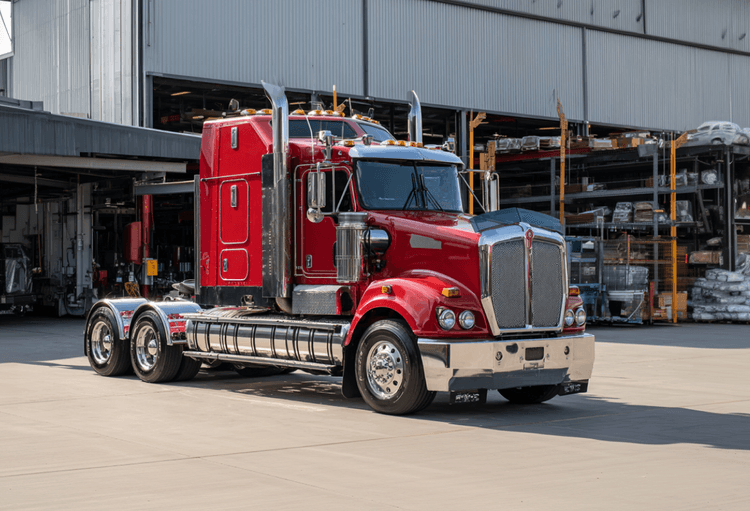
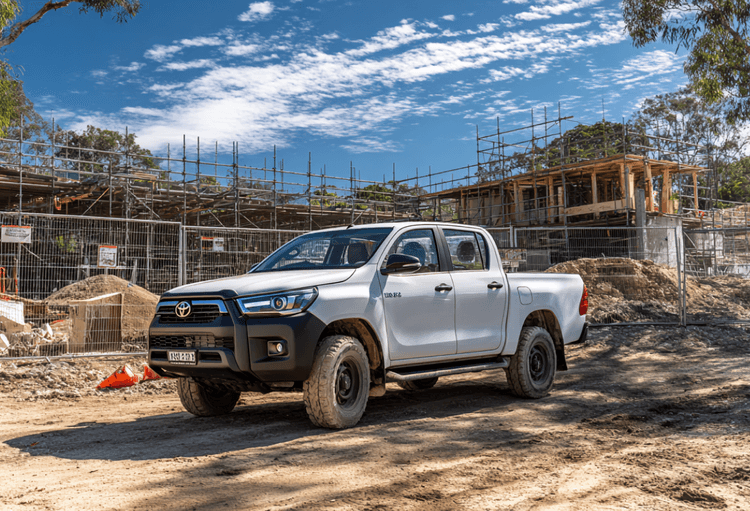
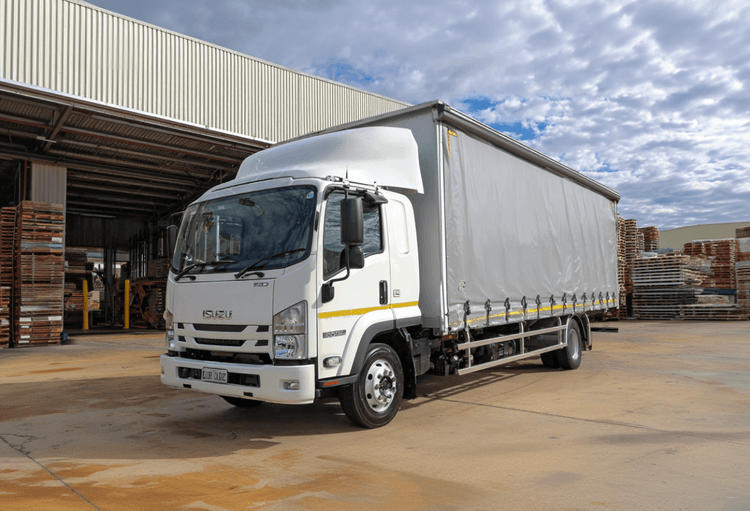
Vehicles: Cars, utes, vans, trucks, trailers, buses. Vehicle finance often settles fastest because lender valuations are automated. See our dedicated pages for truck finance and business car loans.

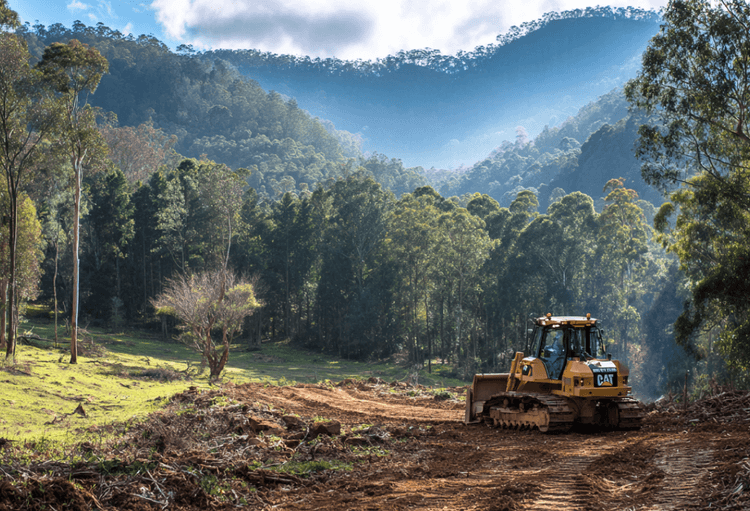
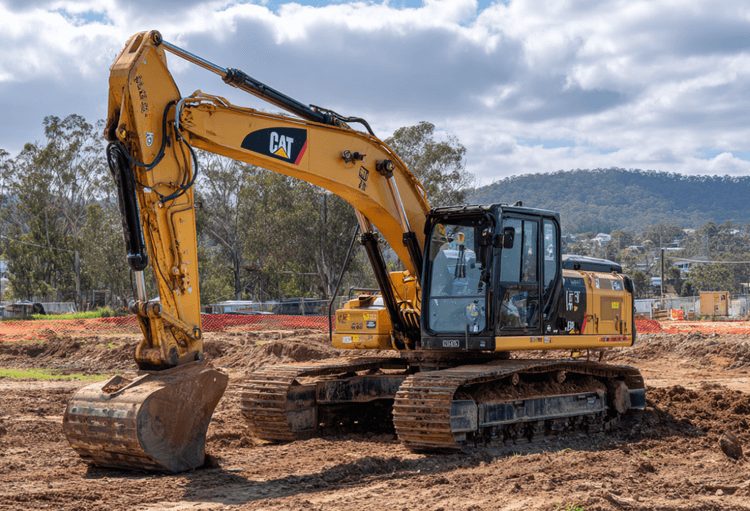
Construction and earthmoving: Excavators, loaders, cranes, bobcats, concrete pumps, scaffolding. Strong lender appetite due to established resale markets and long useful lives.

Manufacturing and production: CNC machines, production lines, welding equipment, compressors, 3D printers. Lenders assess the asset's useful life and secondhand demand. See our equipment finance page for detailed structure comparisons.

Technology and IT: Servers, networking equipment, commercial software licences, point-of-sale systems. Shorter maximum terms (3-5 years) are common given faster depreciation.

Medical and dental: Diagnostic machines, surgical tools, dental chairs, imaging equipment. Competitive rates due to the stability of healthcare practices.

Agricultural: Tractors, harvesters, irrigation systems, grain storage. Seasonal repayment structures available to match farming cycles. See our farm equipment finance page.

Renewable energy: Commercial solar panels, battery storage, energy management systems. Savings on energy bills can offset or exceed the loan repayments.

Hospitality and retail: Commercial kitchens, refrigeration, coffee machines, shop fit-outs. Fit-out finance may require additional security for items that become fixtures.

Asset finance rates: what determines your cost

Asset finance rates through our panel start from 6.59%. The rate you qualify for depends on five factors that lenders assess together.

1. Asset type and age. Lenders categorise assets as primary (vehicles, standard machinery), secondary (specialised equipment, older assets), or tertiary (niche items with limited resale). Primary assets attract the best rates. A common rule is the asset can't be older than 10 to 15 years at the end of the loan term. A used truck that's 8 years old on a 5-year term (13 years end-of-term) might add 1-2% to the rate. The same truck at 12 years old on a 5-year term (17 years end-of-term) may not be financeable at all.

2. Your business profile. ABN age, annual turnover, and industry. Businesses trading 2+ years with consistent revenue get the best pricing. Start-ups under 12 months face higher rates but can still access finance through specialist lenders.

3. Credit history. Clean personal and business credit gets the sharpest rates. Past defaults or judgements in the last 5 years can push rates 3-5% higher. A buyer with a credit score of 480 could be looking at 12%+ on the same asset that a 700+ score buyer finances at 7%.

4. Loan-to-value ratio. A deposit of 10-20% reduces the lender's exposure and can unlock a lower rate tier. On a $100,000 asset, a $10,000 deposit can save thousands in total interest over the term.

5. Term length. Shorter terms attract lower rates on many products. The difference between 6.59% and 12% on a $100,000 loan over five years is $15,900 in extra interest.

For detailed rate bands and worked examples, see our guide to asset finance interest rates.

Asset finance vs an unsecured business loan

The core difference is security. Asset finance is secured against the asset you're buying. Unsecured business loans have no collateral, so the lender charges a higher rate to compensate for the greater risk.

On a $100,000 loan over 5 years, the gap between asset finance at 7% and an unsecured loan at 14% is roughly $19,000 in total interest. That's $317 per month in additional cost for the unsecured option.

Asset finance wins when you're buying a clearly identifiable asset, purchased from a known dealer or supplier, under 10 years old, with an established resale market. The lender can value and resell the asset if needed, so they price accordingly.

An unsecured business loan makes more sense when the purchase doesn't qualify for asset finance (older assets, fit-outs that become fixtures, working capital wrapped into the purchase), when you need funds faster than asset finance allows (some unsecured lenders fund same-day), or when the amount is small enough that the rate difference is negligible.

A common strategy is to finance the primary asset (vehicle, machine) with asset-secured lending at the lower rate, then use a smaller unsecured facility for the ancillary costs (installation, training, accessories) that don't qualify as separate financeable assets.

For a detailed side-by-side comparison with worked numbers, see our guide to asset finance vs a business loan.

Tax benefits of asset finance

Asset finance offers up to four separate tax benefits. The exact benefits depend on your finance structure and business size.

GST credits. If your business is GST-registered, you can claim the GST component of the purchase price on your next BAS. On a $110,000 asset (GST-inclusive), that's $10,000 back within weeks of purchase. For passenger vehicles, the credit is capped at $6,334 (based on the ATO car depreciation limit of $69,674 for 2025-26).

Depreciation. You can depreciate the asset's cost base over its effective life. Small businesses with turnover under $10 million can use the instant asset write-off for assets costing less than $20,000, deducting the full cost in the year you first use it. The $20,000 threshold is now permanent from 1 July 2026. Assets over $20,000 go into the small business pool at 15% in the first year and 30% each year after.

Interest deductions. Interest paid on a chattel mortgage or hire purchase is fully tax-deductible as a business expense. On a $100,000 loan at 8% over five years, total interest is roughly $21,700. At the 25% small business tax rate, that saves around $5,425.

Lease payment deductions. Under a finance lease, the entire lease payment (not just interest) is deductible as an operating expense, simplifying your tax treatment.

The combination of GST credits, depreciation, and interest deductions on a $100,000 chattel mortgage can return more than $31,000 in tax benefits over five years. Always consult your accountant for advice specific to your situation.

Asset finance for startups and newer businesses

Most mainstream lenders require 12 to 24 months of ABN history for asset finance. If your business is newer than that, your options narrow but don't disappear.

Specialist lenders on our panel will consider ABNs as young as 3 months if the director has strong personal credit and relevant industry experience. A tradesperson with 15 years of experience starting their own business faces less scrutiny than a first-time business owner in an unfamiliar industry.

For businesses under 12 months, lenders typically want to see:

  • 3 to 6 months of business bank statements showing consistent deposits
  • Clean personal credit (no defaults in the last 5 years)
  • A deposit of 10-20% of the asset value
  • The asset purchased from a dealer (not private sale)

Startup rates are typically 2-4% higher than established business rates. On a $60,000 vehicle, that premium costs roughly $3,600 to $7,200 in additional interest over five years. Many startups take their first asset finance at the higher rate, prove their repayment track record, then refinance 12 to 24 months later at a significantly better rate.

For the full approval process and common mistakes to avoid, see our guide to asset finance for startups.

Why use an asset finance broker?

A single-lender application gives you one rate from one credit policy. If your profile doesn't fit their criteria perfectly, you either get declined or pay a premium. You won't know whether a better offer existed elsewhere.

An asset finance broker compares your application against multiple lenders simultaneously. Different lenders have different appetites: one might specialise in construction equipment, another in medical assets, another in startup lending. A broker matches your specific situation to the lender most likely to offer the best terms.

Through Emu Money, one application reaches 50+ lenders. You see matched rates, terms and structures side by side. The lender that offers the best rate on a $200,000 excavator may not be the same lender that's sharpest on a $40,000 van, and a broker knows which panel members have appetite for which asset types.

The broker service costs you nothing. Lenders pay the broker a commission from their margin. Your rate is typically the same (or better) than going direct, because brokers have volume-based pricing arrangements that individual applicants can't access.

Using a broker also means one credit inquiry instead of multiple applications. Each separate lender application creates a credit check on your file. Multiple inquiries in a short period can lower your credit score and signal desperation to subsequent lenders.

Types of asset finance

The main types of asset finance available to Australian businesses are:

Chattel Mortgage

A secured loan where you own the asset from day one while the lender holds a mortgage over it as security. Perfect for business equipment, vehicles, and machinery purchases.

Loan Amount$5,000 - $2,000,000
Term12 - 84 months
Interest RateFrom 6.59%
Time to Fund24 - 48 hours
EligibilityABN registered, GST registered (if applicable), Australian Citizen or PR
Pros
  • Immediate ownership of the asset
  • Tax benefits - claim GST credits and depreciation
  • Flexible repayment terms available
  • Lower interest rates due to security
Cons
  • Asset serves as security - risk of repossession
  • Comprehensive insurance typically required
  • Ongoing maintenance responsibilities
Best For

Established businesses looking to purchase equipment, vehicles, or machinery with immediate ownership and maximum tax benefits.

Hire Purchase

A financing arrangement where you hire the asset with an obligation to purchase it at the end of the term. Combines the benefits of gradual ownership with manageable monthly payments.

Loan Amount$5,000 - $2,000,000
Term12 - 84 months
Interest RateFrom 6.59%
Time to Fund24 - 48 hours
EligibilityABN registered, GST registered (if applicable), Australian Citizen or PR
Pros
  • Guaranteed ownership at term completion
  • Fixed monthly payments for budgeting
  • No large upfront capital required
  • Tax benefits available during the term
Cons
  • No ownership until final payment made
  • Higher total cost than outright purchase
  • Asset cannot be sold during the term
  • Early termination may incur penalties
Best For

Businesses that want eventual ownership of assets but need to spread the cost over time, particularly suitable for essential equipment with long useful life.

Finance Lease

A lease agreement where you use the asset throughout the lease term with the option to purchase it at the end. Ideal for businesses wanting to preserve cash flow while accessing essential equipment.

Loan Amount$5,000 - $2,000,000
Term12 - 84 months
Interest RateFrom 6.59%
Time to Fund24 - 48 hours
EligibilityABN registered, GST registered (if applicable), Australian Citizen or PR
Pros
  • Lower upfront costs and deposits
  • Preserves working capital and credit lines
  • Tax deductible lease payments
  • Option to purchase at lease end
Cons
  • No ownership until lease completion
  • Total cost may be higher than outright purchase
  • Early termination penalties may apply
Best For

Growing businesses that need equipment access without large capital outlay, or companies wanting to preserve cash flow for operations.

Asset finance repayment calculator

Estimate your weekly, fortnightly or monthly repayments. Adjust the loan amount, term and interest rate to match your asset purchase.

Loan Amount
$
Establishment Fee
$
Loan Term (months)
Interest Rate
%
Total amount to repay
$0.00
Your repayments
$0.00

Balance over time

Enter loan details to see the chart

Case Study

Daniel Marchetti - Asset Finance Case Study

Daniel Marchetti, Marchetti Civil Contracting


Challenge: Daniel needed to replace two ageing excavators and add a new tipper truck to service a 12-month council contract. The three assets totalled $420,000. Paying cash would have wiped out his working capital buffer and left nothing for wages during the contract ramp-up period.

Solution: Applied through Emu Money and was matched with a specialist construction lender offering chattel mortgages on all three assets. Rate: 7.29% fixed over 5 years. Combined monthly repayment of $8,370 across the three loans. No deposit required on the excavators (both under 3 years old from an authorised dealer). 10% deposit on the tipper to access the best rate tier. Approved in 72 hours, all three assets delivered within two weeks.


From Our Customers

See what our customers have to say about us.

VerifiedVerified Review

Brad provided excellent guidance throughout the entire loan process, making it much easier for me to achieve my financial goals. His expertise and support were invaluable, and I'd highly recommend him to anyone looking for a reliable finance broker.

Marlon

Review posted on 2025-08-13

VerifiedVerified Review

Really happy that it only took few days and no muck around. Ryan was friendly and able to help me pay off a loan and get a new car. Best part was taking away all the stress. Keeping me informed along the way with texts worked with me perfectly! Thanks.

Sheree F.

Review posted on 2023-11-15

VerifiedVerified Review

Robyn was very professional in her mannerism in organising us our loan . Robyn was always polite .. She kept us up to date and informed on the development of our loan even after hours as it was hard for us to speak to her during work hours . Very helpful when your not tec savy I would highly recommend Robyn to anyone needing to deal with Emu Loans and will definitely recommend her to friends and family . Keep up the great work Robyn You are a true inspiration to you job Karen Grimston

karen c.

Review posted on 2025-09-19

VerifiedVerified Review

I've worked with Brad from Emu Money a few times now, and I highly recommend. Brad is very responsive to emails (even when on holiday in Fiji), keeps me up to date and gets everything organised very quickly. Brad spoke directly with my supplier and they figured everything out. I won't hesitate to work with Brad again.

Christine F.

Review posted on 2025-11-16

VerifiedVerified Review

I had such a great experience with Evette when sorting out my car loan. She made the whole process really easy and stress-free, was always quick to answer any questions, and genuinely cared about getting me the best outcome. Super friendly and professional. I'd happily recommend Evette to anyone looking for a car loan!

Dillon F.

Review posted on 2025-08-20

VerifiedVerified Review

I couldn't be happier with the service I received! Robyn made the whole car finance process so simple and stress free. She explained everything clearly, kept me updated the whole way through, and went above and beyond to find me the best deal. I honestly didn't think it would be this smooth, but she took care of all the hard work and I was in my new car before I knew it. Highly recommend to anyone looking for finance.

harry b.

Review posted on 2025-09-10

Asset finance FAQs

Common questions about asset finance, structures, rates, and tax benefits.

These helpful FAQs will help you find the answers you need. If you can't find what you're looking for, you can request a callback below.

What is asset finance?
What types of assets can I finance?
What is the difference between a chattel mortgage, hire purchase and finance lease?
How quickly can I get approved?
Do I need a deposit?
Can I get asset finance with bad credit?
How old can the asset be?
What are the tax benefits of asset finance?
Is asset finance cheaper than an unsecured business loan?
Can a startup get asset finance?
What is a balloon payment?
How can Emu Money help with asset finance?